

Expanding and collapsing Runchat nodes
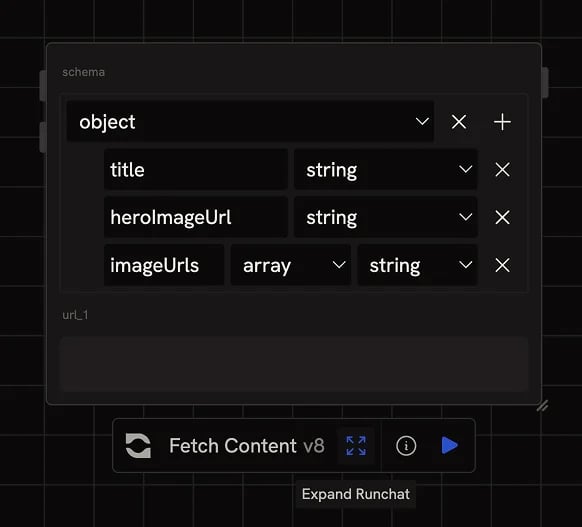
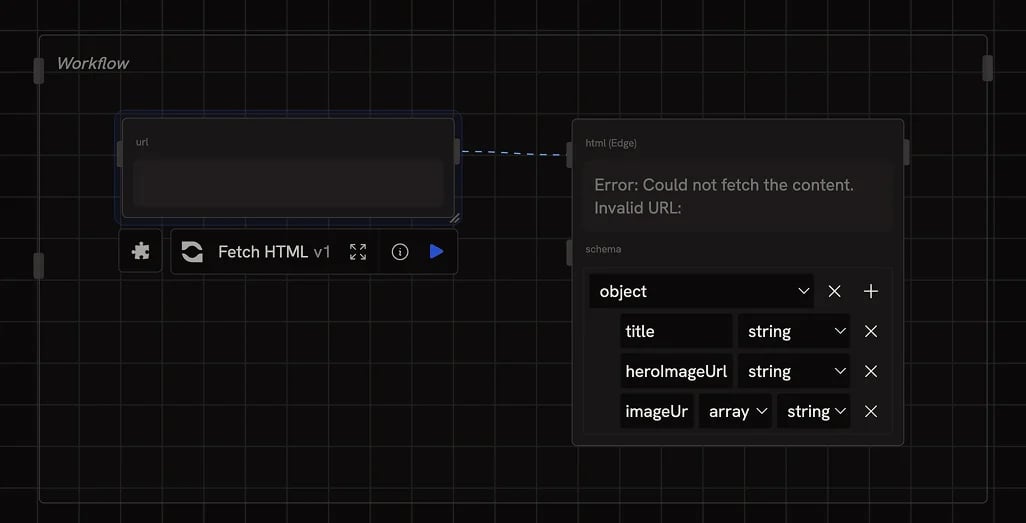
The expand and collapse toggle is disabled until you run the Runchat and create some internal state to view.
Expanding and collapsing Agent nodes
You can also expand theAgent node to view the internal state of any Tools used by that node to return a response to your prompt. First, add tools to the Agent node in the node settings bar, then run the node. If a tool was used you will then be able to expand the Agent node using the expand button in the settings bar.
Internal state
The expanded view shows the internal state of the tool when it was last run. If you run the parent node (Agent or Runchat) again, the inputs and outputs of the child nodes will update to reflect this new state. This is a useful diagnostic tool for detecting bugs in workflow logic or flaws in prompts.
Editing subflows
You can make changes to nodes in a subflow (e.g. toCode or Agent nodes) and these will be saved as a custom override to the Tool. This is useful for quickly exploring variations on prompts or fixing bugs.